
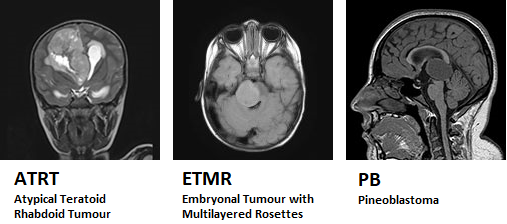
Embryonal brain tumours are the largest category of brain tumours diagnosed in children aged 0-14 years
FACTs
- About 40-60% are “infant brain cancers” – affecting children 0-5 yrs of age
- often high-risk diseases which can spread to other parts of the brain and spine.
- Include rare cancers – ATRTs, ETMRs, Pineoblastoma
- Often treated with a combination of surgery, chemotherapy and brain/spine radiation
CHALLENGES:
- Best treatment for aggressive and high-risk infant brain cancer remains unknown
- All patients worldwide receive highly intense multi-prong therapy including surgery, intensive chemotherapy and radiation
- High intensity therapy improves outcomes in only 30-50% of patients with aggressive infant embryonal brain cancer
- Infant brain cancer patients who survive have severe long-term neurological damage from brain and spine radiation treatment
Barriers to precision medicine for infant brain cancers
- Lack of a consistent framework for therapy worldwide
- Effectiveness of therapy is often unpredictable
- Lack of tools to determine which patients need less or more treatment
- Lack of precise tools to detect treatment failure or response in real time
OUR GOALS –
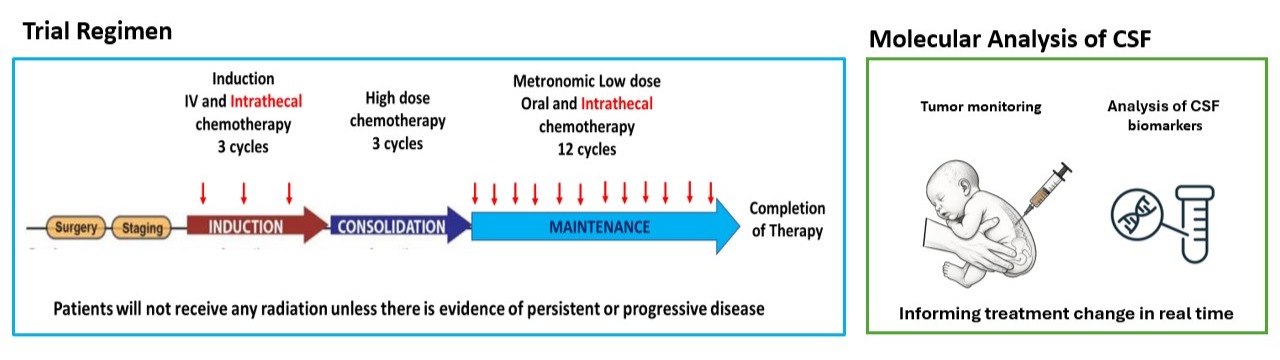
To establish a precision model of treatment for infant and rare brain cancers
To limit or eliminate radiation treatment for infant and rare brain cancers
To treat patients using specialized drugs and dosages, tailored to their unique situation
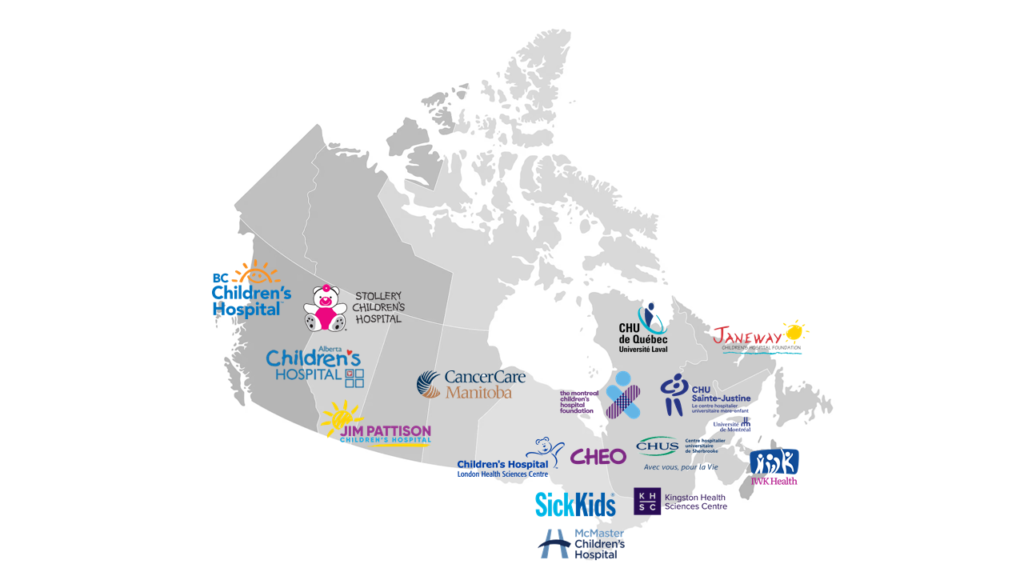
DECRYPT – a multi-centre national trial built on a SickKids radiation avoidance protocol for infant and rare brain cancer
Learn about DECRYPT on ClinicalTrials.Gov