


Rukhsar Sultana | Research Project Manager
We are interested in investigating the underlying functional mechanisms of CAKUT (Congenital Anomalies of the Kidney and Urinary Tract). Patients with CAKUT present with fewer nephrons, the functional unit of the kidney. The process of how nephrons develop hinges on proper communication between stromal and nephron progenitor cells. As the Project Manager, I oversee and am involved in various projects and collaborations in the lab that investigate this intricate process in the normal and malformed kidney.
I also act as the Lab Manager. In this role, I am involved in lab training, animal colony maintenance, safety and a general resource for the lab.

Sara Qubisi | Research Fellow
Kabuki Syndrome (KS) is a genetic disorder caused mainly by de novo mutations in KMT2D or KDM6A and characterized by distinctive facial features, intellectual disabilities, and multisystem malformations including congenital anomalies of the kidneys and urinary tract (CAKUT). I am interested in studying CAKUT underlining mechanisms in Kabuki syndrome (KS) patients utilizing the kidney organoids model derived from KS patients induced pluripotent stem cells (IPSCs).
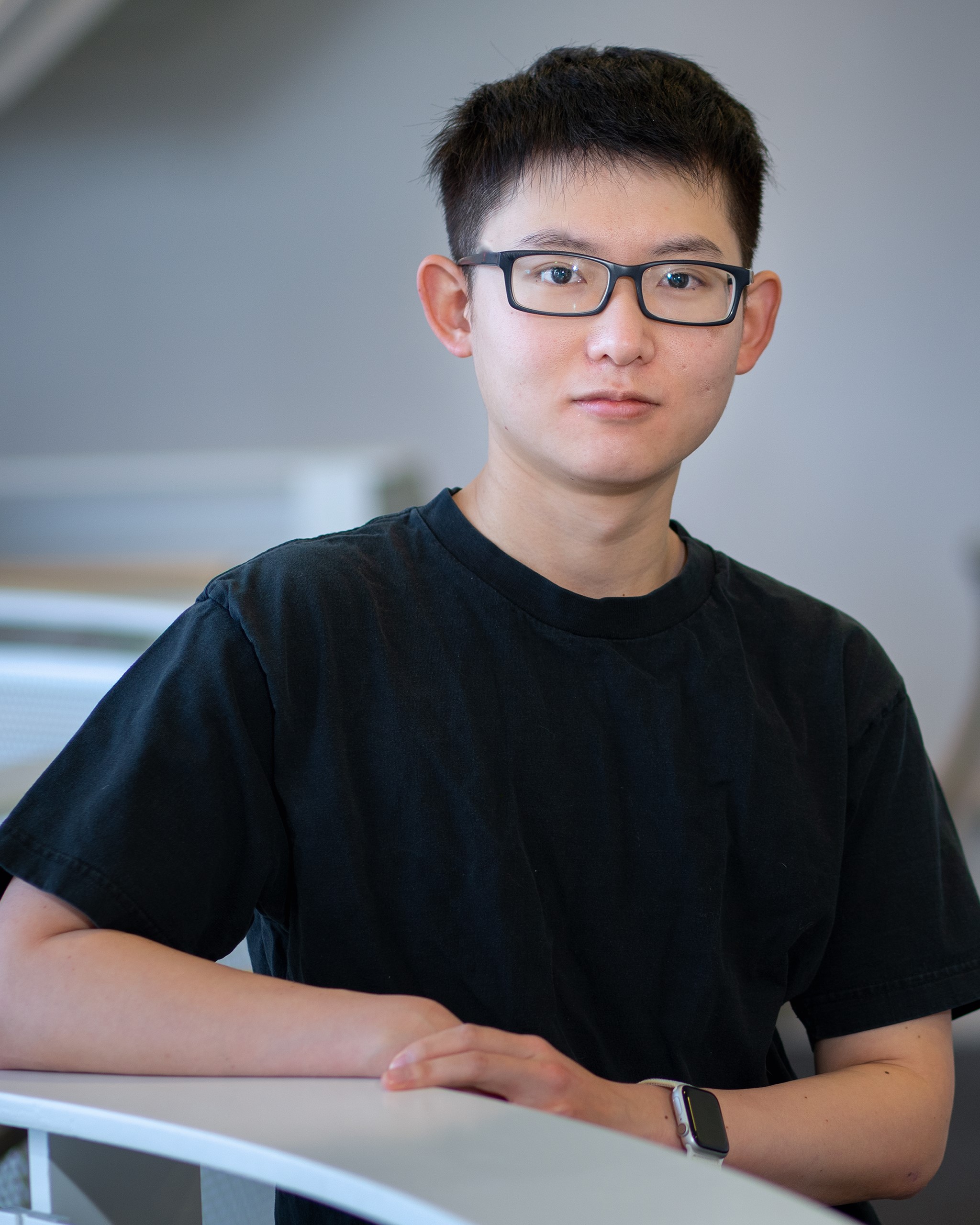
Xiangyue Hu | Research Fellow
I’m interested in the underlying molecular mechanisms of CAKUT disorders (Congenital Anomalies of the Kidney and Urinary Tract). My project focuses on Integrin-linked Kinase (ILK), which controls branching morphogenesis during kidney development. Recently, two missense variants of ILK have been identified from patients with CAKUT disorders. Previous studies in our lab have demonstrated that these variants are associated with renal malformation by disrupting a series of signaling pathways. My goal is to characterize the signaling role of these ILK variants in renal-urinary tract malformation.

Jon Lacanlale | Graduate Student
I am interested in understanding the molecular and cellular mechanisms of CAKUT (Congenital Anomalies of Kidney and Urinary Tract) with a particular focus on Ureteropelvic Junction Obstruction (UPJO). Patients with UPJO have a blockage at the junction connecting the kidney and ureter, which subsequently results in hydronephrosis due to urine build-up. Previous work in our lab has demonstrated the importance of Hedgehog (Hh) signaling and recently, TGFß signaling, in the development of this phenotype. My project is focused on elucidating the mechanism of the Hh-TGFß signaling axis with regards to UPJO formation by temporally and spatially investigating the progenitor that gives rise to the nephrogenic and stromal compartments of the kidney.

Dina Greenberg | Graduate Student
Pallister-Hall Syndrome (PHS) is a rare disease characterized by a diverse spectrum of malformations, including congenital anomalies of the kidney and urinary tract (CAKUT). However, only a subset of patients with PHS have CAKUT. PHS is caused by truncating variants of the Hedgehog signaling effector GLI3. I am investigating GLI3 variants found in PHS patients; my goal is to profile patient-specific variants through 1) biochemical and 2) human kidney organoid modelling. This will allow us to better understand the mechanisms underlying variable penetrance of CAKUT in PHS.