Olga Sirbu
About me
My research interests centre on the metabolic biology of pediatric CNS malignancies, with a particular focus on leptomeningeal metastasis. I am interested in how tumor cells adapt to challenging microenvironments and how these adaptations influence metastatic progression and treatment response. Prior to joining the lab as a Postdoctoral Fellow, I trained in Dr. Michael Taylor’s group, where I developed a strong interest in cancer metabolism and translational neuro-oncology. Outside of the lab, I enjoy reading, spending time with friends and family, and walking along the lake.
Why Science?
I’m drawn to science because I like difficult problems, particularly ones that constantly evolve as you study them. Cancer has a way of resisting simplicity. The deeper you look into it, the more it reveals itself to be adaptive, heterogeneous, and constantly changing in response to its environment. I think there is something intellectually compelling about working on a disease that refuses to remain static and that forces us to rethink the frameworks we use to understand it.
Over time, I’ve come to appreciate that research is often incremental and unpredictable, but that is also what makes it rewarding. Some of the most interesting work comes from trying to understand how and why biological systems adapt under pressure, especially in diseases that resist conventional ways of thinking. I’ve also come to appreciate that science is less about arriving at definitive answers than it is about learning how to ask better questions over time.
What is your favourite part about working at the BTRC?
My favourite part about working at the BTRC is the collaborative and intellectually curious environment. One of the things I value most is being surrounded by people who are constantly challenging each other to think more critically and creatively. I also appreciate the close connection between research and clinical care, which keeps the work grounded in questions that have real relevance for patients and families.
What advice do you have for anyone interested in a career in science?
I think one of the most important things is learning to become comfortable with uncertainty and failure. Research rarely progresses in a straight line, and some of the most valuable insights come from experiments or ideas that initially do not work the way you expected. I think it’s important to hold on to the part of science that excites you, because that sense of wonder is what makes the difficult parts worth enduring.
Hobbies and interests?
Outside of the lab, I enjoy listening to Lana Del Rey on repeat, disappearing into internet rabbit holes, and spending far too much time getting carried away by ideas and brainstorming sessions.
If a celebrity were to play you in a movie about your life, who would it be and why?
Probably Natalie Portman, mostly because I’ve loved her movies for years and she somehow always feels slightly existential in a way I appreciate lol :)
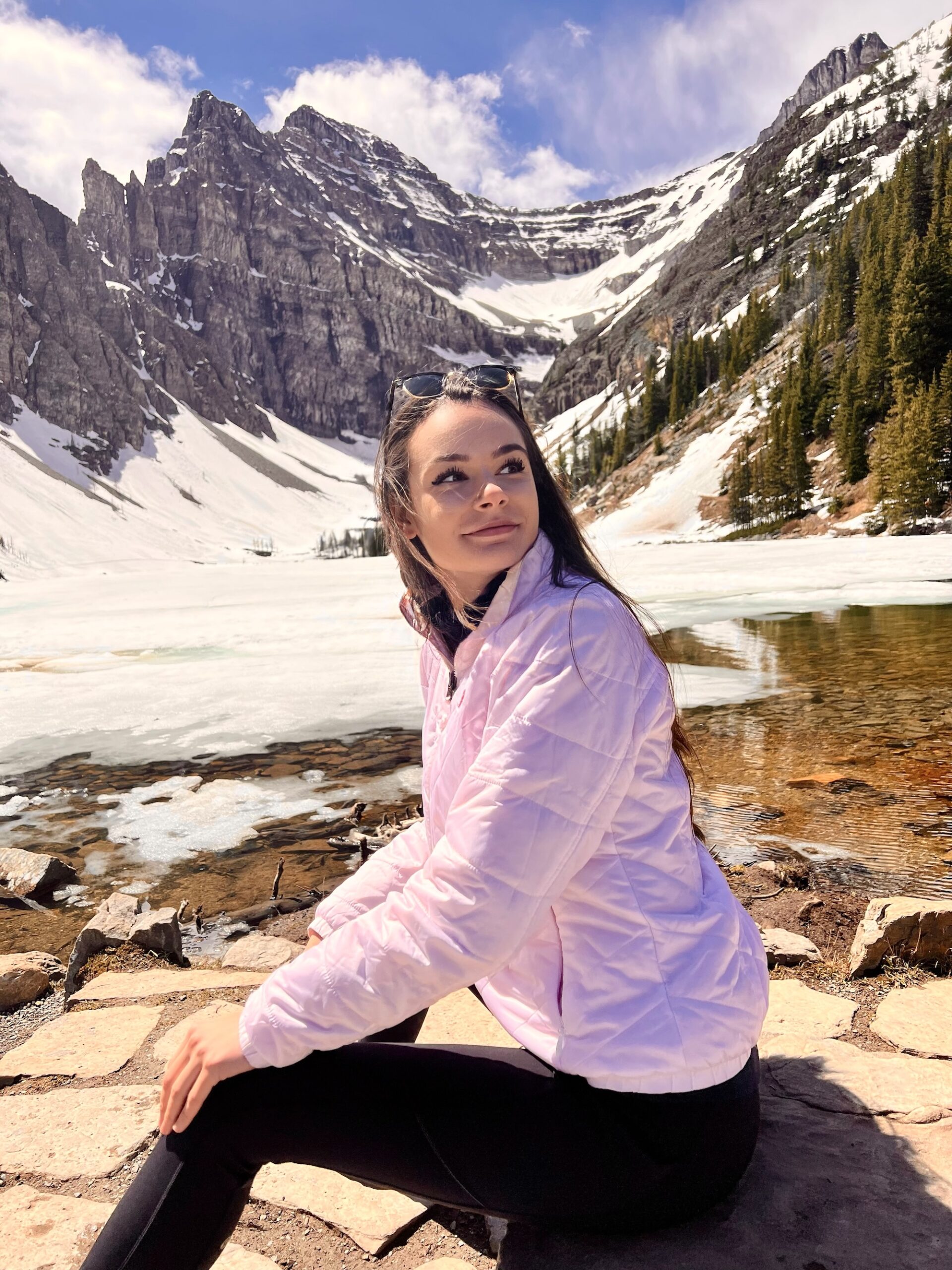
Olga Sirbu
About me
My research interests centre on the metabolic biology of pediatric CNS malignancies, with a particular focus on leptomeningeal metastasis. I am interested in how tumor cells adapt to challenging microenvironments and how these adaptations influence metastatic progression and treatment response. Prior to joining the lab as a Postdoctoral Fellow, I trained in Dr. Michael Taylor’s group, where I developed a strong interest in cancer metabolism and translational neuro-oncology. Outside of the lab, I enjoy reading, spending time with friends and family, and walking along the lake.
Why Science?
I’m drawn to science because I like difficult problems, particularly ones that constantly evolve as you study them. Cancer has a way of resisting simplicity. The deeper you look into it, the more it reveals itself to be adaptive, heterogeneous, and constantly changing in response to its environment. I think there is something intellectually compelling about working on a disease that refuses to remain static and that forces us to rethink the frameworks we use to understand it.
Over time, I’ve come to appreciate that research is often incremental and unpredictable, but that is also what makes it rewarding. Some of the most interesting work comes from trying to understand how and why biological systems adapt under pressure, especially in diseases that resist conventional ways of thinking. I’ve also come to appreciate that science is less about arriving at definitive answers than it is about learning how to ask better questions over time.
What is your favourite part about working at the BTRC?
My favourite part about working at the BTRC is the collaborative and intellectually curious environment. One of the things I value most is being surrounded by people who are constantly challenging each other to think more critically and creatively. I also appreciate the close connection between research and clinical care, which keeps the work grounded in questions that have real relevance for patients and families.
What advice do you have for anyone interested in a career in science?
I think one of the most important things is learning to become comfortable with uncertainty and failure. Research rarely progresses in a straight line, and some of the most valuable insights come from experiments or ideas that initially do not work the way you expected. I think it’s important to hold on to the part of science that excites you, because that sense of wonder is what makes the difficult parts worth enduring.
Hobbies and interests?
Outside of the lab, I enjoy listening to Lana Del Rey on repeat, disappearing into internet rabbit holes, and spending far too much time getting carried away by ideas and brainstorming sessions.
If a celebrity were to play you in a movie about your life, who would it be and why?
Probably Natalie Portman, mostly because I’ve loved her movies for years and she somehow always feels slightly existential in a way I appreciate lol :)