
The Christopher Pearson Lab is dedicated to understanding repeat expansion diseases by investigating their underlying molecular mechanisms and exploring therapeutic strategies. Using a wide range of experimental models—including patient‑derived cell lines, mouse models of disease, and post‑mortem human tissues—the lab integrates basic and translational research approaches. These efforts are organized around several key research themes that aim to elucidate disease pathogenesis and advance the development of effective treatments.
Disease & Therapy
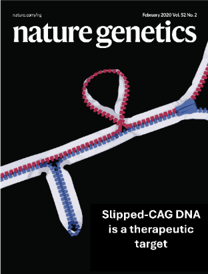
A major focus of the Christopher Pearson Lab is developing disease‑modifying therapies for CAG repeat expansion disorders, with Huntington’s disease (HD) as a central model. HD is caused by inherited CAG expansions in HTT that undergo further somatic expansion in vulnerable brain regions, accelerating disease onset and progression. Our work targets the DNA structures that drive pathological repeat expansion, leading to the discovery of the small molecule naphthyridine‑azaquinolone (NA), which selectively binds slipped CAG DNA intermediates and induces contraction of expanded repeats. NA promotes mutant‑allele–specific repeat contraction through transcription‑ and MutSβ‑dependent pathways, independently of DNA replication. In HD patient cells and mouse models, NA‑induced contractions reduce mutant huntingtin aggregation, rescue molecular and cellular disease hallmarks, improve motor and behavioral phenotypes, and attenuate neurodegeneration, supporting somatic repeat expansion as a tractable therapeutic target. Extending this strategy to related CAG repeat diseases, we have demonstrated repeat contraction–mediated therapeutic benefit in models of dentatorubral‑pallidoluysian atrophy (DRPLA), and we investigate shared and distinct mechanisms of striatal vulnerability in spinocerebellar ataxia type 1 (SCA1). Together, these studies establish targeting somatic repeat instability as a promising and broadly applicable therapeutic approach for CAG repeat disorders.
In addition to CAG repeat expansions, our efforts to target pathogenic repeat DNA structures extend to other disease‑causing repeat motifs, including the GGGGCC hexanucleotide repeat associated with C9orf72‑linked neurodegenerative disorders. These GGGGCC repeats form abnormal DNA and RNA secondary structures that contribute to repeat instability, transcriptional dysregulation, and cellular toxicity. We are actively screening and characterizing a series of small‑molecule ligands designed to selectively bind these repeat‑associated structures, with the goal of reducing repeat length and mitigating downstream pathogenic processes. Using cellular and disease‑relevant model systems, we are evaluating the ability of these ligands to modulate repeat dynamics, suppress toxic species, and establish proof‑of‑principle for repeat‑structure–targeted therapeutic strategies beyond CAG expansion diseases.
Disease & Mechanism
The Christopher Pearson Lab investigates how pathogenic repeat expansions disrupt genome stability, cellular homeostasis, and tissue‑specific vulnerability across a spectrum of neurodegenerative and neuromuscular disorders. Central to this work is understanding how repeat sequence composition and higher‑order DNA and RNA structures drive somatic repeat instability, chromosomal damage, and downstream molecular pathology. By combining repeat biology, genome instability, and structure‑based approaches, we define disease mechanisms in disorders caused by GGGGCC, CTG, and complex interrupted repeats, revealing shared principles and disease‑specific modifiers that shape onset, progression, and clinical severity. These mechanistic insights provide a foundation for identifying structure‑specific therapeutic targets across diverse repeat expansion diseases.
GGGGCC repeat
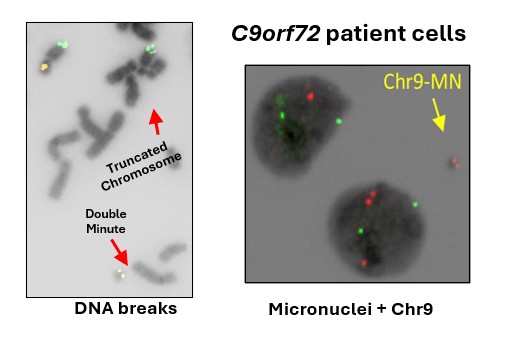
We focus on ALS linked to C9orf72 repeat expansions and explore how both DNA repeat biology and small molecule targeting contribute to disease mechanisms. We study small molecules that bind the pathogenic (GGGGCC)n repeat and investigate how C9orf72 expansions destabilize the hyper unstable 9p21 chromosomal locus. We show that C9orf72 expansions induce a large, folate sensitive chromosomal fragile site (FRA9A), encompassing an extensive gene rich region that includes immune genes and oncogenes. This fragility drives somatic repeat instability, chromosomal breakage, rearrangements, and micronuclei formation, providing endogenous sources of damaged and immunostimulatory DNA that activate cGAS STING–linked interferon and DNA damage responses. These defects are transferable in vivo, accumulate with age, and are modulated by folate levels, establishing C9orf72 expansions as a direct source of chromosomal instability and immune dysregulation in ALS and related neurodegenerative and autoimmune disorders.
CTG Repeat Expansion Disorders
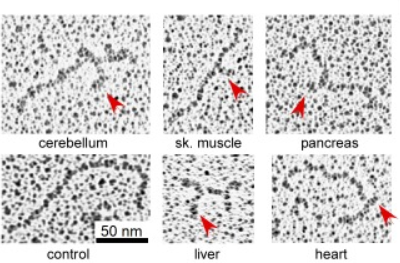
This project investigates a disease modifying strategy for myotonic dystrophy type 1 (DM1) by directly targeting pathogenic CTG repeat expansions in the DMPK gene. Building on our discovery of the small molecule DNA ligand naphthyridine azaquinolone (NA), which induces repeat contractions in CAG expansion diseases, we assess whether structure specific binding of slipped CTG DNA can similarly reverse somatic CTG expansions. Using a validated DM1 mouse model, we will examine whether c a compound can modulate repeat instability, toxic RNA pathology, and DM1 relevant neuromuscular and CNS phenotypes.
Repeat Instability and Structural Determinants in XDP and CANVAS
The Christopher Pearson Lab also investigates repeat expansion mechanisms in X linked dystonia parkinsonism (XDP) and cerebellar ataxia, neuropathy, and vestibular areflexia syndrome (CANVAS) to understand how repeat sequence composition and structure modify disease expression. In XDP, caused by a polymorphic SINE VNTR Alu (AGAGGG)n insertion in TAF1, we identified mosaic divergent repeat interruptions (mDRILS) that influence repeat stability, generational transmission, and age at onset, highlighting the role of somatic mosaicism in disease modification. In CANVAS, we demonstrated that only pathogenic RFC1 repeat motifs form unusual DNA and RNA structures, including G quadruplexes and triplexes, providing a molecular explanation for disease specificity. Together, these studies reveal how repeat interruptions, structure, and instability contribute to neurodegeneration and uncover structure specific targets for therapeutic intervention
DNA Repair Proteins And Repeat Diseases
Pathogenic DNA repeat expansions arise from aberrant processing of secondary DNA structures formed during replication, transcription, and repair, implicating DNA repair proteins as key modifiers of disease onset and progression. The Christopher Pearson Lab investigates how structure‑specific DNA repair factors recognize, process, or misprocess slipped‑DNA intermediates, thereby influencing somatic repeat instability in the brain. By dissecting the roles of single‑stranded DNA–binding complexes and repair nucleases, we uncover how distinct DNA repair pathways can either protect against or promote repeat expansion, providing mechanistic insight into why disruption of genome maintenance disproportionately drives neurodegenerative repeat expansion diseases.
Replication Protein A (RPA)
Canonical replication protein A (RPA), composed of RPA1, RPA2, and RPA3, plays a protective role against pathogenic repeat expansion by stabilizing single‑stranded DNA intermediates that arise during slipped‑DNA formation. We found that RPA is upregulated in Huntington’s disease (HD) and spinocerebellar ataxia type 1 (SCA1) patient brains and interacts with key modifiers of CAG repeat instability. Mechanistically, RPA enhances DNA duplex melting and promotes FAN1‑mediated excision and repair of slipped CAG structures, thereby suppressing somatic repeat expansions in human cells. In vivo, RPA overexpression in SCA1 mouse brains ablates CAG expansions, reduces ATXN1 aggregation and DNA damage, improves neuronal morphology, and rescues motor phenotypes, identifying RPA as a potent suppressor of disease‑driving repeat instability.
Alternative RPA (Alt‑RPA)
Alternative RPA (Alt‑RPA), a primate‑specific ssDNA‑binding complex consisting of RPA1, RPA3, and RPA4, exhibits a functional role distinct from canonical RPA in repeat expansion diseases. Alt‑RPA is similarly upregulated in HD and SCA1 brains but displays a divergent interactome that includes modifiers of repeat instability. In contrast to RPA, Alt‑RPA inhibits slipped‑DNA melting and suppresses FAN1‑mediated excision and repair of CAG slip‑outs, thereby promoting repeat expansions in human cells. These opposing effects suggest an antagonistic interplay between RPA and Alt‑RPA, in which Alt‑RPA may offset the expansion‑suppressive activity of RPA, with broader implications for DNA metabolism and disease progression.
FAN1
FAN1 is a structure‑specific nuclease that directly processes slipped‑DNA intermediates underlying inchworm‑like expansions of CAG and CGG repeats implicated in disorders such as HD, fragile X syndrome, and autism. We show that FAN1 engages slipped DNAs through iterative binding and dimerization cycles, producing characteristic exonucleolytic pausing patterns along slip‑outs that are sensitive to repeat sequence and base‑pair mismatches. CAG slip‑outs are excised more slowly than CTG slip‑outs, while fully paired hairpins and disease‑delaying interruptions further impede excision. Rare FAN1 variants are associated with CGG/CCG expansion disorders, and repeat‑contracting small molecules such as naphthyridine‑azaquinolone require FAN1 activity for their therapeutic effect. These properties position FAN1 as a critical regulator of repeat instability and disease onset through modulation of slip‑out processing dynamics.
MLH1
MLH1 collaborates with FAN1 to regulate DNA repair pathways that influence both genome stability and repeat expansion disease. We identified specific FAN1 motifs required for MLH1 binding, and disruption of this interaction impairs interstrand crosslink repair and slipped CAG/CTG excision, leading to enhanced repeat instability. The FAN1–MLH1 interaction is dynamically regulated through FAN1 phosphorylation at S126 by cyclin‑dependent kinases, linking cell‑cycle control to repeat stability. These findings establish the FAN1–MLH1 complex as a phosphorylation‑regulated node that integrates DNA repair, repeat expansion control, and disease modification in neurodegeneration and cancer.
Our Collaborators
- Dr. Ryan Yuen, Department of Molecular Genetics, University of Toronto.
- Dr. Paul Frankland, Departments of Psychology, Physiology, Institute of Medical Science, University of Toronto.
- Dr. Janice Robertson, Department of Laboratory Medicine & Pathobiology, University of Toronto.
- Dr. Rachel J. Harding, Department of Pharmacology and Toxicology, University of Toronto.
- Dr. Jean-Yves Masson, Department of Molecular Biology, Medical Biochemistry, and Pathology, University Laval.
- Dr. Eric Wang, Molecular Genetics & Microbiology, University of Florida.
- Dr. John ‘Jay’ Schneekloth, Center for Cancer Research, National Cancer Institute
- Dr. Nathaniel Heintz, Director, Fisher Center for Alzheimer’s Research, The Rockefeller University.
- Dr. Harry Orr, Department of Laboratory Medicine and Pathology, University of Minnesota.
- Dr. Richard Faull, University of Auckland, New Zealand.