
2025
How does the brain change from toddlerhood to adulthood? A new study from our lab, in collaboration with the University of Nottingham, shows how excitatory and inhibitory processes evolve across brain development. “Just like a well-tuned orchestra, our brains rely on a delicate balance of signals. We now have a way to measure how this balance changes from early life to adulthood and can use this to better understand developmental differences in conditions like autism.” – Dr. Natalie Rhodes
A new UK-Canada initiative is supporting 10 innovative, rigorously selected research projects in the field of quantum sensing and quantum communications. Among the funded projects is a collaboration to harness the potential of OPM-MEG technology for biophysical modelling of brain function. On the Canadian side, our team will play a crucial role in the project, particularly data collection and analyses in children and youth.
2024
In this video, Dr. Julie Sato, a Senior Research Associate in our lab, offers a behind-the-scenes look at her research journey and what drives her both inside and outside the lab. Read more about her story here: Exploring the developing brain with postdoctoral fellow Dr. Julie Sato.
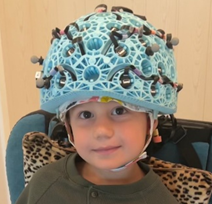
How can OPM sensors measure signals from inside the brain, and why are they so uniquely suited for studying young children? In this interview with Physics World, Dr. Margot Taylor discusses how the technology enables her pioneering research on brain development and how it differs in children with and without autism. The OPM-MEG helmets used for brain recordings were developed by Cerca Magnetics, a UK-based spin-out from the University of Nottingham. CEO David Woolger shares insights into how the technology works and its expanding range of applications.
2023
In our lab at SickKids, we use OPM sensors to investigate brain development in young children, and to gain insights in the early neural signatures of autism spectrum disorder. “Thanks to this technology, we can start to change the way young children and their families interact with research.” – Dr. Margot Taylor
Quantum technology is not just about quantum computers. This episode of the Financial Times Tech Tonic podcast explores the transformative potential of quantum sensors, highlighting how they are already being used in our lab to study brain activity in small children. These sensors provide an unprecedented window into the workings of young brains, something previously impossible with conventional imaging.
2021
Our lab was the first to deploy the wearable OPM-MEG system developed by Cerca Magnetics. Since then, we have completed studies in more than 200 children.


